

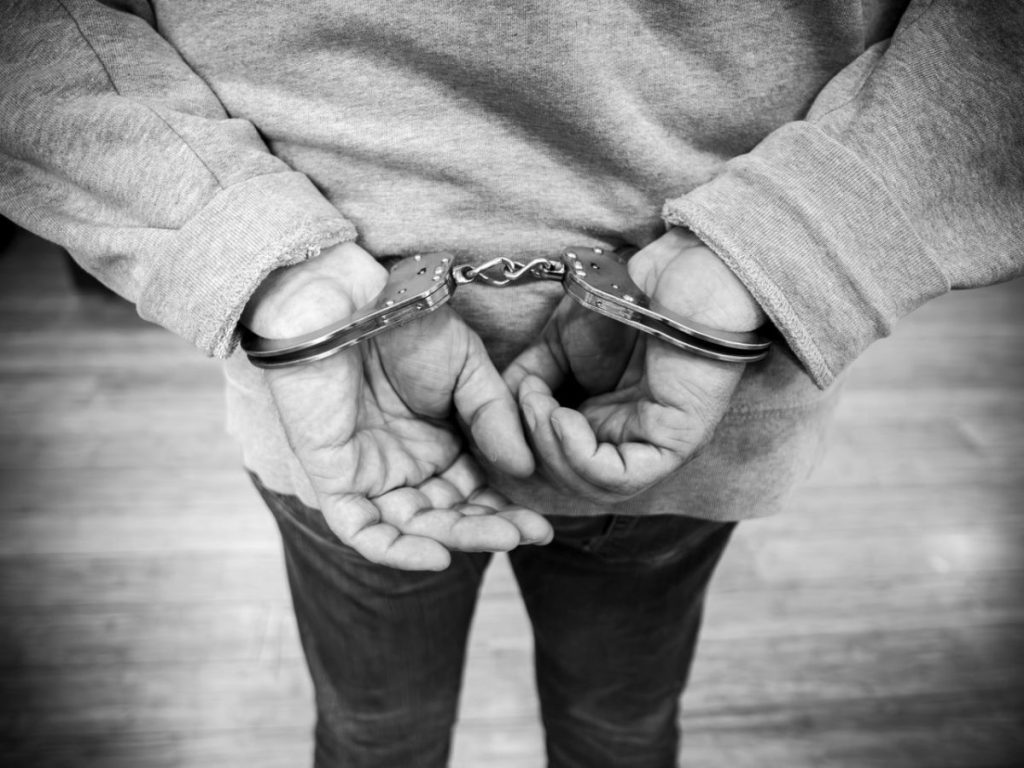
Since the reversal of Roe v. Wade, the landmark U.S. Supreme Court decision that had protected abortion access nationwide, there has been an uptick in arrests of pregnant people.
To be more exact: Over 900 pregnant individuals have been arrested since that 2022 decision was handed down in the case of Dobbs v. Jackson Women’s Health Organization.
Pregnancy Justice, a New York City-based charitable organization supporting pregnant people’s rights, released a report this month chronicling these arrests. “In the first three years after Dobbs, prosecutors initiated at least 902 cases charging pregnant people with crimes related to pregnancy, pregnancy loss, or birth,” experts wrote in the report, “Pregnancy as a Crime.”

In most instances, charges of abuse and neglect were filed, usually relating to substance abuse during pregnancy. Yet no proof of actual harm was required in most of those cases. Atop that, “13 cases included allegations pertaining to abortion, including obtaining, attempting or researching an abortion.” The report did not specify the outcomes of these respective cases.
Jessica Valenti, a longtime gender and politics writer, pointed out in her takeaway of the report that “in 550 cases, that was the only allegation — meaning these women weren’t accused of harming their fetus. What’s more, dozens of charges involved women using ‘substances’ as part of ongoing medical treatments.”
The majority of the cases were based in South Carolina, Oklahoma and Alabama, three states that have some of the most restrictive abortion laws in the U.S., while simultaneously struggling to offer adequate prenatal and maternal healthcare to residents. And, the majority of the individuals arrested were low-income, and reliant upon some form of governmental assistance.
“These numbers show that the criminalization of pregnancy in this country is not some distant or hypothetical consequence of abortion bans,” Pregnancy Justice President Lourdes A. Rivera told Valenti. “It is already happening.”
Dana Sussman, senior vice president at Pregnancy Justice, additionally told The Nation that “the foundation for prosecuting pregnancy is based in the war on drugs from the 1980s, and the way in which Black women, in particular, were targeted for charges of child abuse when they were deemed substance users.”
But while this has been a trend for decades, the loss of federal-level protections from the reversal of Roe v. Wade makes this a matter for states to decide – many of them, including the three strictest listed above, are choosing the most restrictive path. And, critically, these charges also hinge upon the personhood of the fetus being codified into laws, she adds.
“That is, ultimately, the anti-abortion movement’s goal,” she said, because “the federalization of fetal and embryonic personhood … would ban abortion without question, without exception, and it would allow for increased criminalization of people who are not performing pregnancy in the way that the powers that be might want them to.”
