
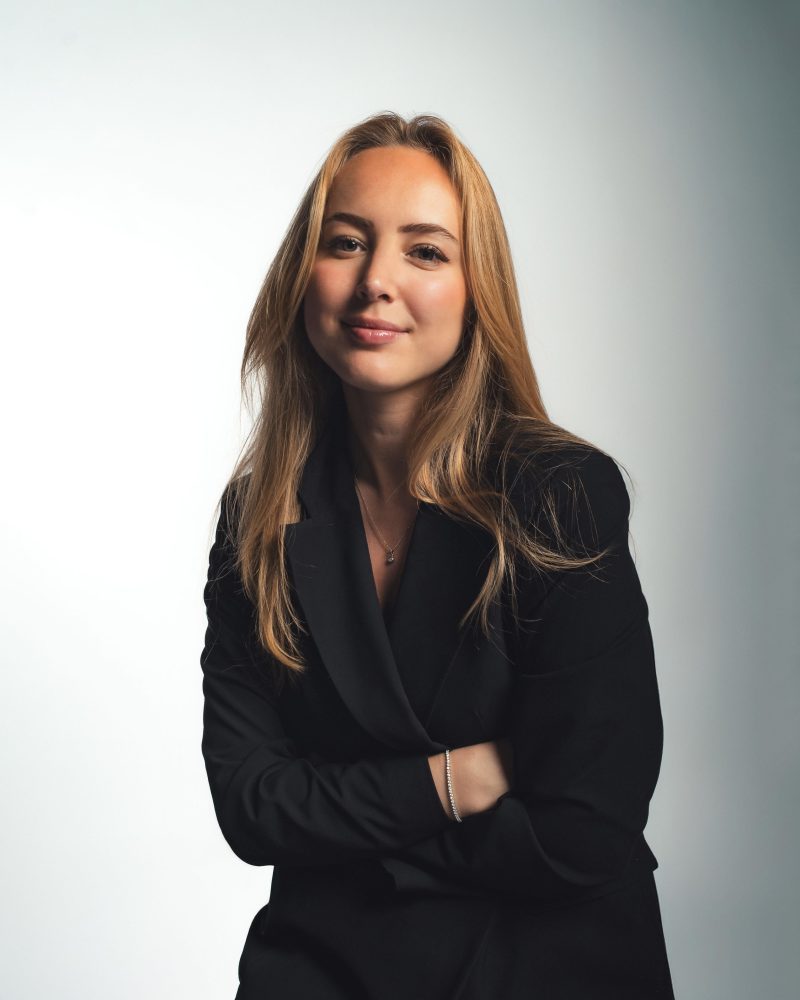
Milena Mass, founder of Ode. (Credit: Courtesy of Ode)
She’s Giving Live Performances Life Beyond the Moment
Milena Mass created Ode to help theater-goers preserve their experiences while giving productions of every size a lasting record of an audience’s response.

A great theater production can stay with you long after the curtain falls. But for many shows – especially independent productions without professional reviewers or other extensive press coverage – the audience’s response can quickly disappear into time. Milena Mass, a theater producer and arts administrator based in Jersey City, New Jersey, founded Ode to change that. The free app lets theater-goers discover and log productions, write reviews called “odes,” and connect with fellow audience members, all while giving the makers a way to collect lasting feedback. Launched in December 2025, Ode grew out of Mass’ own experience on both sides of the stage — and her belief that live performances deserve a long life.
Here’s our lightly edited Q&A, from The Story Exchange 1,000+ Stories Project.
How is your business different from others in your industry?
Most existing theater platforms are built around ticket sales, production listings, professional reviews or Broadway news. We are built around the audience’s ongoing relationship with theater: Discovering and logging productions, rating them, writing “odes,” making lists and following other theater-goers.
At the same time, it gives theater-makers free tools for listing their productions and gathering ratings, written responses and testimonials. This is particularly valuable for independent work that may not have a large marketing budget or receive formal press coverage. We do not intend to replace critics or arts journalism; we sit beside that ecosystem, widening the record of how a production affected the people who experienced it. It is designed for theater at every scale, from festivals and black boxes to Broadway.
Tell us about your biggest success so far.
Taking an idea and turning it into a functioning public platform. I launched the app in December 2025 and have since built partnerships with independent productions, created free promotional resources for theater-makers, and developed original editorial features that bring artists and audiences together. One particularly meaningful milestone was having producers discover us independently and approach me because they saw its value for their work. This confirmed that the problem I wanted to address was not just something I had experienced personally. I am proud to have built both the product and its early community from the ground up as a solo founder.
What is your top challenge and how have you addressed it?
Growing a two-sided platform with limited resources. I have addressed this by growing through relationships: Collaborating with independent and off-Broadway productions, creating free theater-maker resources, featuring artists through original video content and introducing the app directly to theater communities. This approach is more gradual than relying on a large advertising budget, but it allows us to grow around genuine participation, and gives me direct insight into what our users need – a truly organic, grassroots approach.
Have you experienced any significant personal situations that have affected your business decisions?
I am preparing to welcome my first child while building this company through its earliest stages. This has meant learning in real time how to sustain the growth of an entrepreneurial venture while preparing for the biggest life transition I have ever experienced. I have had to become more intentional about my priorities, establish systems and identify which parts of the business truly require my direct involvement. It has encouraged me to create evergreen content, deepen partnerships and put structures in place so we can continue serving its community when I need to step back.

What is your biggest tip for other startup entrepreneurs?
Listen closely to early users and let their behavior – and not only their compliments – shape what you build next. Progress can be quiet at first, but one meaningful partnership or truly engaged user can teach you more than a temporary burst of attention.
Building a product and building a community are two separate jobs, and both need to begin early. I initially thought it might simply be a matter of “build it and they will come,” but in an age when people are inundated with new offerings every day, even a useful product has to earn attention and trust. Launching the technology is only the starting point; people need repeated reasons to understand why it belongs in their lives. That understanding often grows through direct conversations rather than broad announcements.
How do you find inspiration on your darkest days?
I return to the theater itself. Seeing a production and being reminded of its ephemeral nature brings me back to the purpose of this work: Giving live performance a life beyond the moment. I also pay attention to small signs of progress, such as a producer reaching out, a new person logging a show, or someone immediately understanding and articulating why the platform should exist. I also lean on my family, whose example has taught me that meaningful things are often built slowly. My husband is my biggest supporter, and I do not know whether I would still be chugging away without him cheering on the little wins that pave the way for bigger ones. His belief in me often helps me recover my own.
What is your go-to song to get motivated on tough days?
“Black Magic Woman” by Carlos Santana.
Who is your most important role model?
My family. As immigrants, everything we have was built from the ground up, so resilience and ambition have always been exemplified around me. I naturally draw inspiration from my father, who came from humble beginnings and created real success and security for our family; and from my mother, who raised three daughters before bravely beginning a business of her own. I am also deeply motivated by my younger sister, who is a decade younger than I am and already has a level of drive that I cannot imagine having possessed at her age.