

As AI technology continues to advance, and its use cases proliferate, we’re finding ourselves facing a rather specific scourge: AI for the ladies.
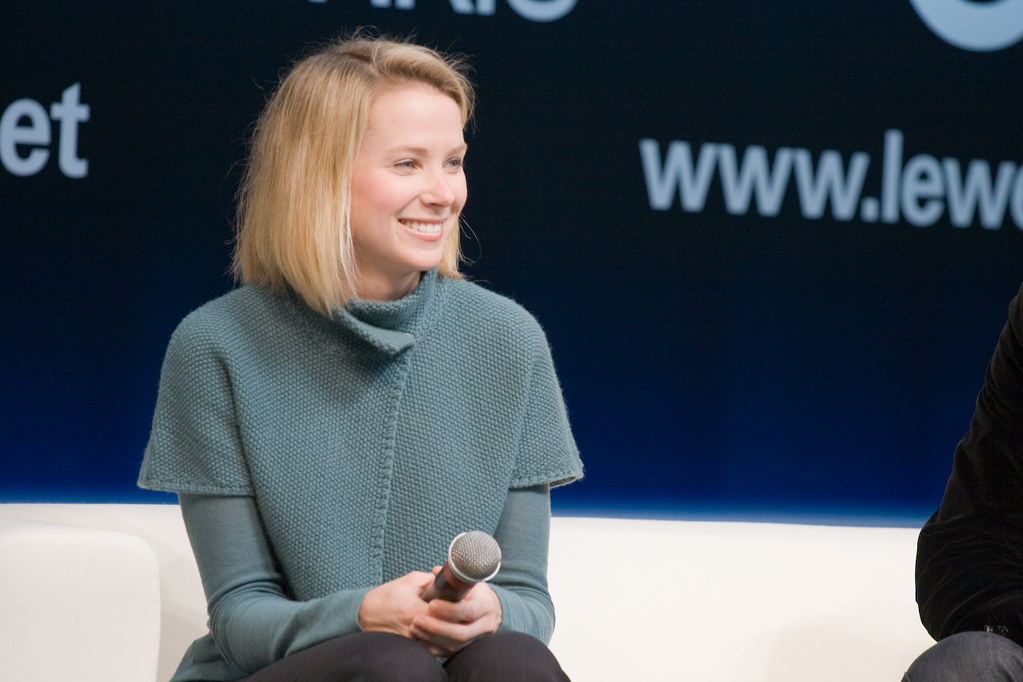
Marissa Mayer, a former executive at tech giants Yahoo and Google, is now setting out on her own. In a splashy New York Times feature, she talks at length about her new project, Dazzle, the AI assistant she launched in September to cater to women’s needs.
And just what are those needs, you may ask? Shopping lists, beauty appointments, home repair services, maintenance of a child’s schedule and booking family activities, per Dazzle’s website. But all of it will now be taken care of by a bot, Dazzle says, one that gleans users’ needs by sifting through their stored photos.
This isn’t the first invasive AI assistant geared toward women to debut this year. Over the summer, Orchid launched with an ad that depicts its usefulness by having it help a couple celebrate their anniversary. Which in this case, means helping the man remember said anniversary even exists, making a dinner reservation and buying the woman’s favorite flowers. All at the woman’s request, and with the help of some data stored in her various other apps, because she knew her man would forget about all of it.

The many things a woman has to worry about outside of work, from kids’ seemingly endless Spirit Weeks to their male partners’ inabilities to assist with dinners, will now be tackled by a machine that learns – then anticipates – your needs based on aesthetic preferences and digital minutiae. If these companies have their way.
Women have traditionally been tasked with the lion’s share of duties inherent in maintaining the household, from managing the family plans and tending to the children, to keeping the refrigerator stocked and her hair perfect. We often make it look easy, sure, but most of us know that’s all a lie – my colleagues even released a brilliant podcast series examining the house-of-cards nature of this vision of womanhood.
But an AI bot isn’t a solution for easing women’s unpaid labor. It’s… more of a lure.
When AI Grows, Who Truly Wins?
Research shows that women are far less likely to use AI technology, and far more likely to be wary of it. Perhaps because everything about it is made for and by men.
On the development side of AI, men comprise the vast majority of employees, with women accounting for just 22% of the workforce. We make up even less of the AI world’s C-suite. This male-centric employee base and leadership crew has created a suite of products with their male biases built in – many of which are, by the way, posing a threat to women’s non-AI jobs far more often than men’s.
UN Women is now sounding the alarm. “A study of 133 AI systems found that 44% demonstrated gender bias,” experts wrote in a June report. “Yet only 51% of marketers currently use human oversight to test … before release.” As a result, the AI offerings available to the public do little to mitigate the harming of women and girls, because much of it happens within its makers’ blind spots, they added.
It’s part of why AI is primed to be our collective downfall. That’s not hyperbole – some of its earliest makers are now claiming it could “kill us all by the end of the decade” if its growth remains unchecked. It’s certainly having a significant environmental impact, with global data centers using 448 trillion watt-hours of electricity combined last year – obliterating and contaminating water supplies in communities internationally.

But those who are content to profit off of AI – the vast majority of them, again, being men – benefit from having more of humanity roped into its use, even if a few of its offerings are made by women. Even President Donald Trump is shilling for it, having recently signed an executive order demanding that AI be rebranded as “super intelligence.”
Plus, selling to us women is good business. We do most of the buying, after all – and will continue to do so as we (slowly) make more money. If all of that growth and profit comes with the benefit of AI’s makers having an “out” from domestic chores – as Dazzle and Orchid and wives and mothers continue to handle everything for them – it’s all the better, right?
AI assistants geared toward women aren’t changing any of this. They aren’t easing the environmental impact that will trickle down to hurt women, or saving our jobs. Nor are they shifting any of women’s traditionally carried responsibilities onto men’s shoulders – instead, they’re just giving women users a new tool for organizing their large, uncompensated workloads, while allowing men to skate by.
Of Dazzle, Mayer noted that some of its earliest users report “interacting more with Dazzle than their spouse.” Is this really what women want, though? Well, no – because younger women are increasingly eschewing marriage in favor of building (and then managing) their own lives.
And that’s happening because… we don’t want an(other) app or program designed to help us maintain the uneven, exhausting status quo. We don’t want to be responsible for overseeing a digital assistant who might slip up on the things we already handle just fine on our own.
Moreover, we don’t want to parent our male partners, or handhold them through the process of participating in their relationships and families. Nor do we want to let them off the hook by turning to a bot for assistance. We want partners who care about doing things for their families. We want partners who want to do that work, because it’s a manifestation of love for themselves and those around them. We want partners who aren’t so lazy they need Dazzle or Orchid to remind them of the dates on which their lives irrevocably changed.
Outsourcing that work to a robot does little beyond giving women yet another thing to manage – yes, even if the robot in question happens to be woman-made. ◼️
